SOME/IP vs DDS: Practical Comparison for Automotive Middleware


Gengini Engineering Team

Software-defined vehicle (SDV) platforms need a communication layer that can move signals between ECUs, domain controllers, and cloud services without turning into a maintenance burden. Two protocols dominate the conversation: SOME/IP (Scalable service-Oriented MiddlewarE over IP) and DDS (Data Distribution Service). Both are used in production automotive systems today, but they solve different problems well and poorly in different ways. This article compares them on the axes that actually matter when you're picking a middleware for a new platform.
Origins and Design Intent
SOME/IP was defined by the AUTOSAR consortium specifically to bring service-oriented communication to classic AUTOSAR ECUs, later extended into Adaptive AUTOSAR. It was designed to interoperate with existing CAN/LIN signal-based systems, which is why it emphasizes:
- Lightweight serialization compatible with constrained ECUs
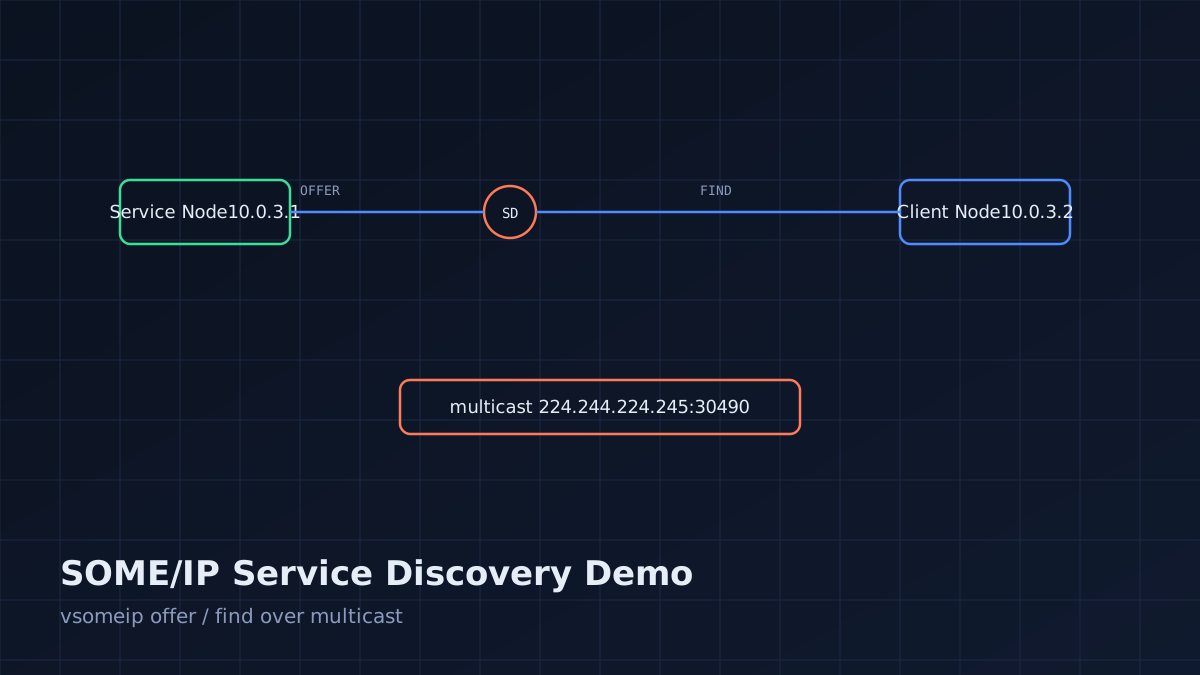
- Service discovery (SOME/IP-SD) tuned for automotive network topologies
- Straightforward mapping from legacy signal catalogs to service interfaces
DDS comes from the OMG (Object Management Group) and originated in aerospace/defense and industrial control systems, where the priority was decentralized, quality-of-service-driven data distribution at scale. Its design goals:
- Global data space abstraction (publish to a "topic," not to an endpoint)
- Fine-grained QoS policies (reliability, durability, deadline, liveliness)
- Peer-to-peer discovery with no central broker
Architecture Comparison
Dimension SOME/IP DDS Communication model RPC + pub/sub over TCP/UDP Pure pub/sub (topic-based) Discovery SOME/IP-SD (multicast-based) RTPS discovery (multicast/unicast) QoS granularity Basic (event vs. method, TTL) Rich (23+ QoS policies) Serialization Custom SOME/IP payload format CDR (Common Data Representation) Typical deployment Body control, powertrain, gateway ECUs Perception, sensor fusion, robotics-style workloads Standardization body AUTOSAR OMG Tooling maturity in automotive High (native AUTOSAR RTE integration) Growing (used in ADAS/AD stacks, ROS 2 default)Where SOME/IP Wins
SOME/IP is the pragmatic choice when you're integrating with an existing AUTOSAR toolchain. If your ECUs already generate RTE code from ARXML, SOME/IP service interfaces slot directly into that workflow. It also wins when:
- You need tight integration with classic AUTOSAR signal routing (PDU routing, COM stack)
- Your network is bandwidth-constrained (in-vehicle Ethernet backbone shared with other traffic classes)
- You need vendor tool support from the major AUTOSAR suppliers (Vector, ETAS, EB) without custom integration work
The service discovery protocol is also purpose-built for automotive network conditions — it degrades gracefully on partial network availability during ECU wake-up sequences, which matters a lot when you have staggered power-up across a vehicle network.
Where DDS Wins
DDS shines in compute-heavy domains: perception stacks, sensor fusion, and any subsystem that already uses ROS 2 (which uses DDS as its default RMW layer). Its QoS model lets you tune reliability and latency per topic instead of per connection, which matters when a single domain controller is juggling:
- High-frequency, best-effort sensor streams (e.g., lidar point clouds) that should drop late data rather than block
- Low-frequency, reliable control commands that must never be dropped
- Historical data replay for logging/debugging via the durability QoS
DDS's decentralized discovery also avoids a single point of failure, which is attractive for safety-relevant domain controllers where you don't want a broker process to be a dependency for basic communication.
Common Failure Modes
SOME/IP:
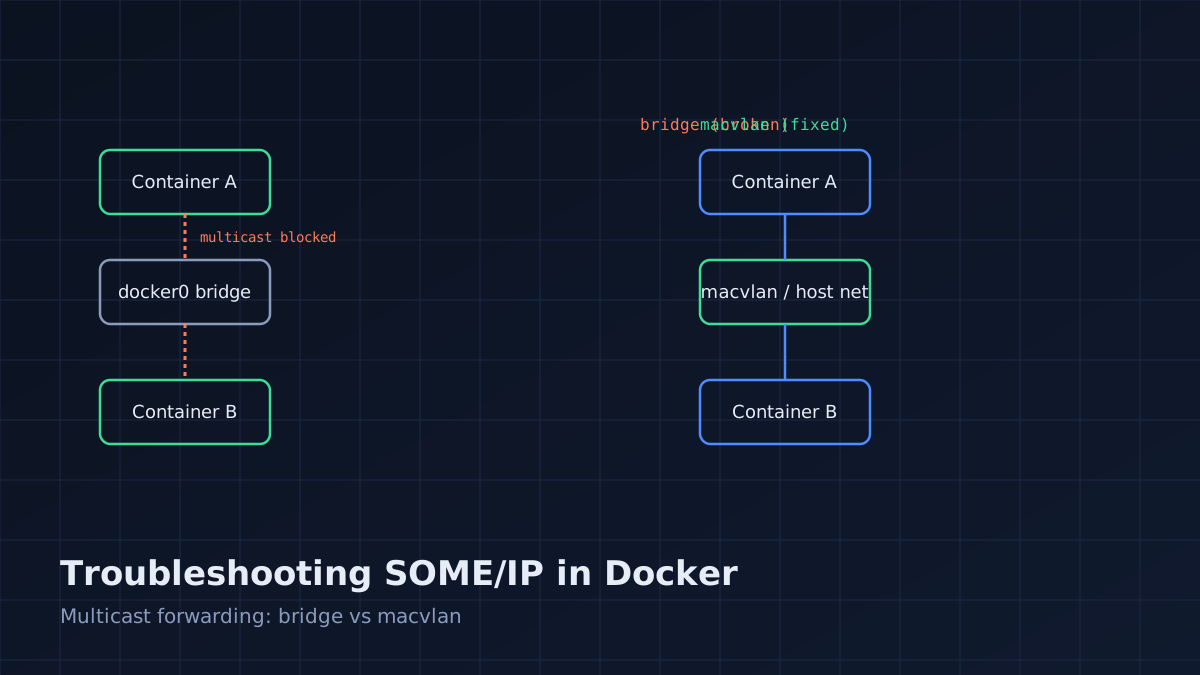
- Underestimating multicast configuration complexity in Ethernet switches — SOME/IP-SD relies on multicast for discovery, and switches with aggressive IGMP snooping defaults can silently drop discovery packets.
- Serialization mismatches between ARXML-generated code on different AUTOSAR vendor toolchains — always validate wire compatibility with a packet capture, not just code generation success.
DDS:
- QoS mismatch between publisher and subscriber is a silent failure — if a subscriber requests
RELIABLEbut the publisher offersBEST_EFFORT, DDS won't connect the endpoints, and there's no error thrown by default. Log discovery events. - Discovery storms on large networks — RTPS multicast discovery can flood a network with many participants; use discovery server / static discovery in production topologies with 50+ participants.
Decision Checklist
Use this to make the call for a new platform:
- Are you integrating with existing classic AUTOSAR ECUs? → Favor SOME/IP
- Do you need per-topic QoS tuning for mixed reliable/best-effort traffic? → Favor DDS
- Is your team already running ROS 2 for perception/planning? → Favor DDS for that domain
- Do you need AUTOSAR vendor tool support out of the box? → Favor SOME/IP
- Is bandwidth on a shared in-vehicle backbone a hard constraint? → Favor SOME/IP's lighter wire format
- Do you need decentralized discovery with no broker dependency? → Favor DDS
Hybrid Architectures
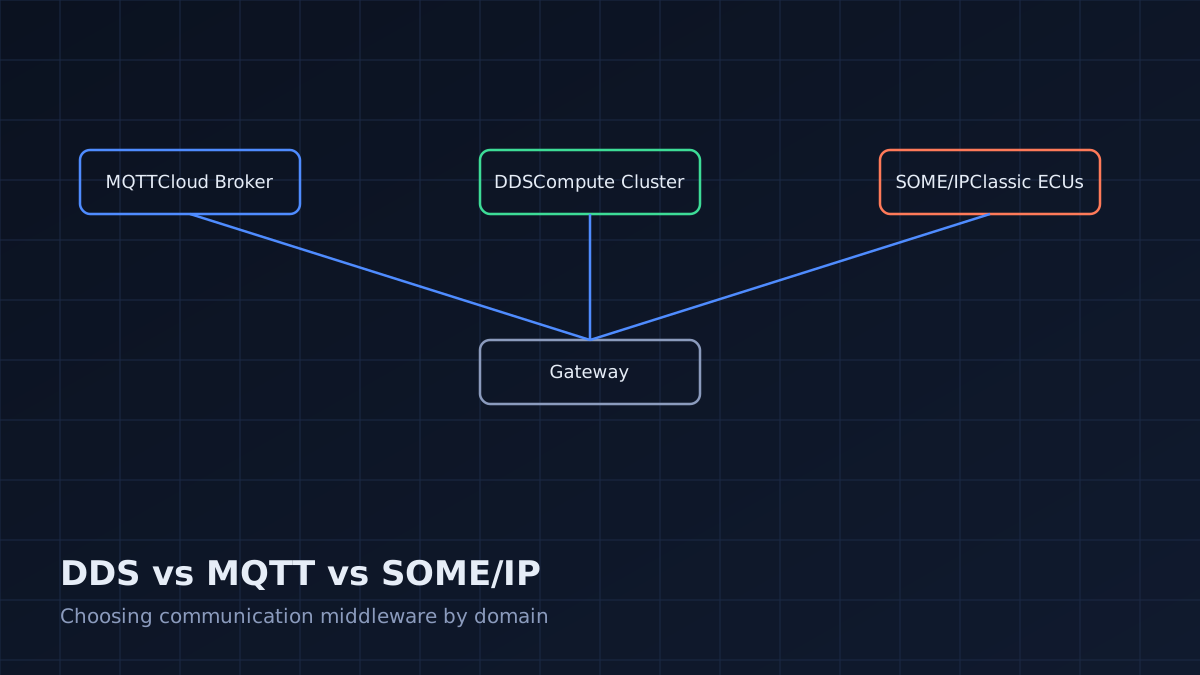
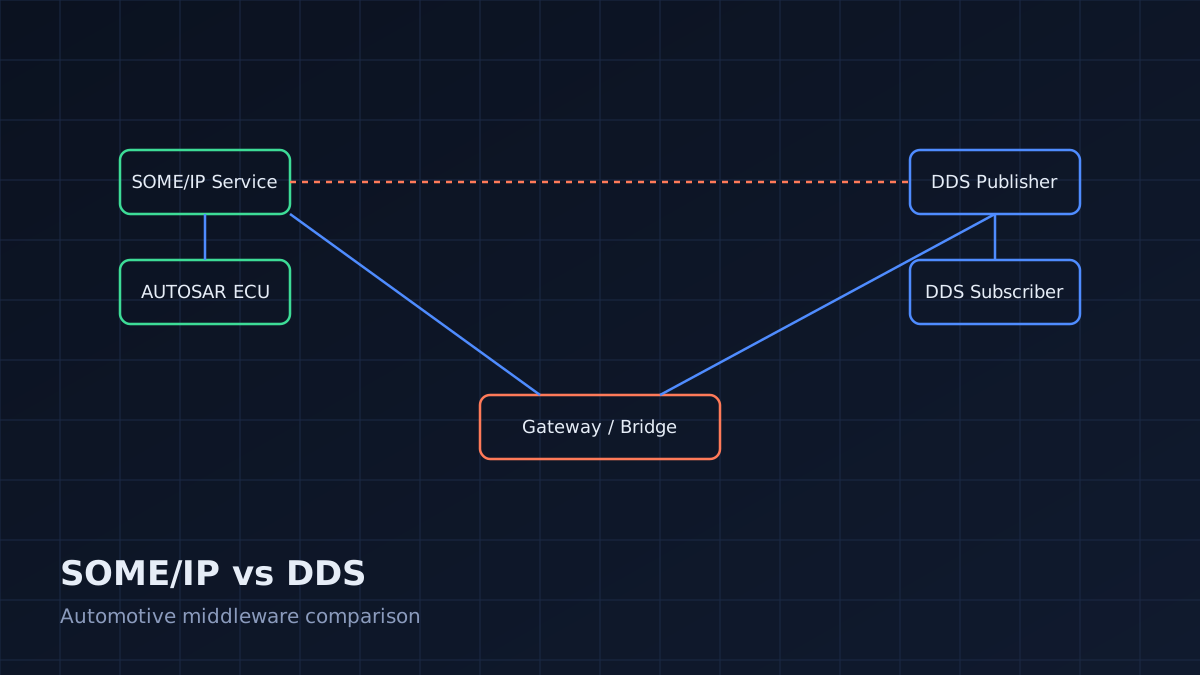
In practice, most SDV platforms end up running both. A common pattern: SOME/IP handles body/comfort/powertrain domains that integrate with classic AUTOSAR, while DDS runs the compute cluster for ADAS/AD workloads. The two domains are bridged at the gateway layer, typically via a service that translates SOME/IP events into DDS topics (or vice versa) rather than trying to unify everything under one protocol.
This is not a compromise — it reflects that the two protocols were built for genuinely different problems. Don't fight your architecture into a single middleware just for consistency; bridge at the boundary and let each domain use the protocol it's actually good at.


Gengini Engineering Team
The Gengini Engineering Team writes practical guides on AI automation, automotive middleware, embedded firmware, cloud software, and industrial IoT systems.